Decoding 3 Striking Lessons from the #IceRukchanok Drama. When Digging into Someone’s Past Becomes a Costly Lesson for Society

In today’s political landscape, where hostility increasingly replaces policy-based debate, personal attacks have become alarmingly normalized—particularly when the target is a woman in politics. Female politicians are often subjected to more complex and deeply personal forms of harassment, ranging from derogatory labels such as “scoi” to the use of AI-generated pornographic content aimed at destroying their credibility.
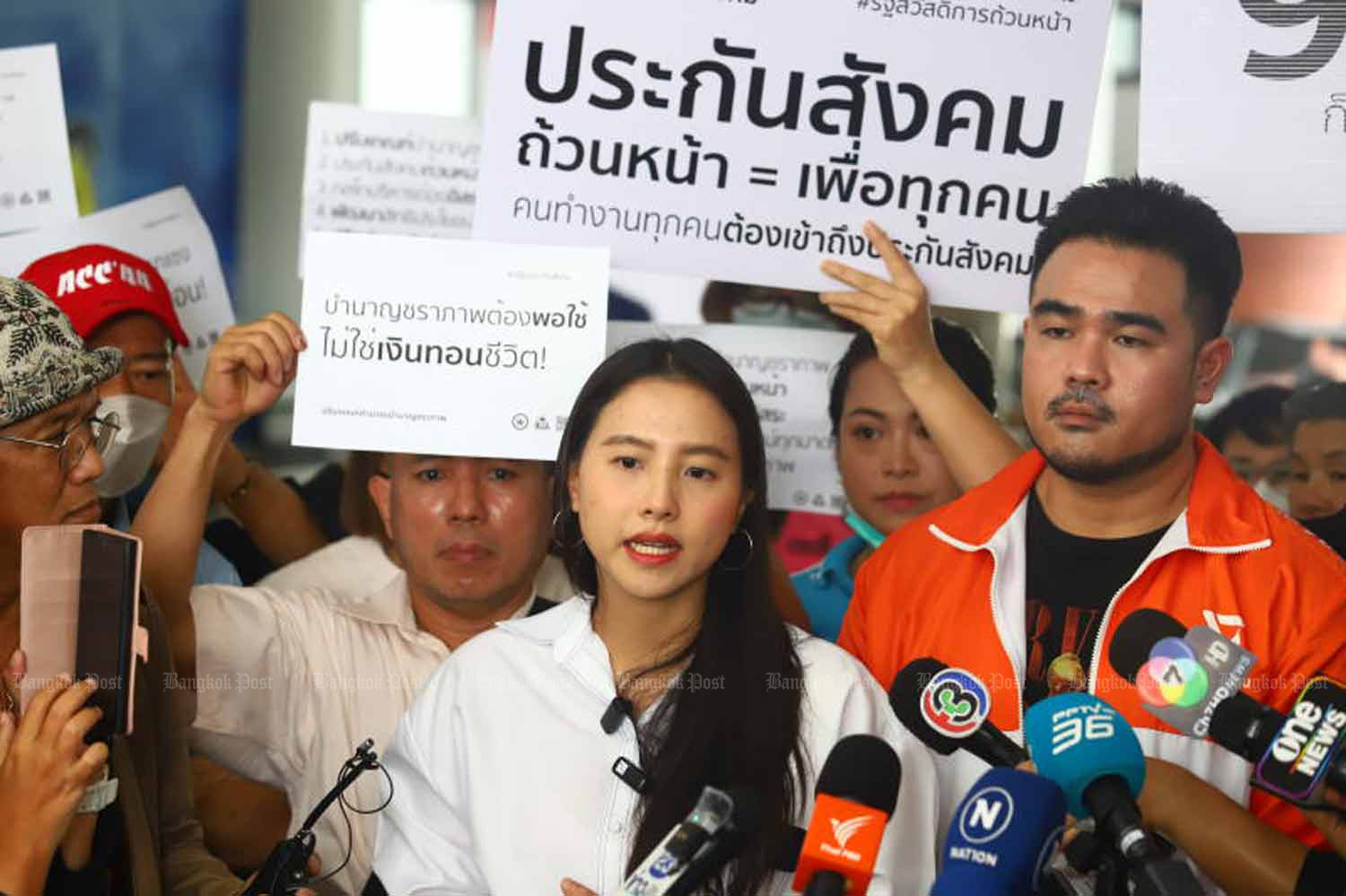
The recent conflict between Assoc. Prof. Dr. Arnond Sakworawich and MP Rukchanok Srinok has thus become a powerful case study. This incident is not merely an online drama; it exposes deep structural fractures within Thai society—particularly around class, political strategy, and human dignity.

1. Reality More Powerful Than Fiction: From the “Sex Worker” Accusation to a Life of Struggle
The controversy began when Assoc. Prof. Dr. Arnond Sakworawich publicly alleged details about the background of Ms. Rukchanok Srinok, claiming that her mother was a “sex worker” and her father a “pimp,” and further asserting that she grew up in a slum without proper upbringing. These claims sharply contradicted Rukchanok’s own life story, which she has openly shared.
Piecing together her narrative reveals a painful yet resilient reality. Rukchanok was born to a mother (Khun Kwanchanok) who worked as a singer in a bar. Due to financial hardship, she was placed in foster care within a slum community partly because the foster family believed she brought good luck in lottery numbers. Her childhood was marked by poverty, drug exposure, and emotional deprivation. She has shared that she “lacked emotional warmth” and “could not remember ever being hugged.”
Despite these harsh conditions, she persevered with the support of friends and ultimately succeeded in gaining admission to the Faculty of Science and Technology (Applied Statistics) at Thammasat University.
The stark contrast between the allegations and her lived reality sparked widespread public backlash. This attack was not merely a factual error—it was a deliberate attempt to weaponize a fabricated background and social stigma to delegitimize a political opponent.
2. Reframing the Narrative: Turning Discrimination into an Ideological Challenge
Following public criticism and after Ms. Rukchanok directly questioned the leadership of the National Institute of Development Administration (NIDA) prompting the institution to issue an official statement Dr. Arnond executed a notable tactical retreat.
He shifted from personal attacks to asserting that sex work is a dignified profession and should be legalized, arguing that political parties and individuals supporting such policies should be “proud” rather than “contradictory” when the issue is raised.
This rhetorical pivot has been widely interpreted as an attempt to neutralize accusations of dehumanization while simultaneously setting an ideological trap for political opponents—reframing what constituted hate speech into a policy debate. This pattern is not unprecedented; in 2021, Dr. Arnond was previously investigated by NIDA after publicly supporting a coup and labeling citizens as “stupid.”
In response, Ms. Rukchanok stated clearly:
“I have no negative attitude toward sex workers. However, out of fairness to my parents, I must insist that they did not engage in the occupations this individual alleged. Those who act in this way often claim they are protecting institutions. Have they ever reflected on whether such behavior actually benefits what they claim to love and defend?”
3. We Don’t Choose Where We’re Born—But We Can Choose to Fight: Storytelling That Challenges Classism
Ms. Rukchanok’s response went beyond denial. She elevated the discourse by addressing three audiences: NIDA’s leadership, its alumni and current students, and—most importantly—people “born without privilege.”
Her message transformed a personal attack into a broader social critique of class-based prejudice. Attacks on one’s “origins” reflect a dominant Thai moral narrative that ties personal virtue to social status and lineage. Rukchanok directly challenged this notion through the powerful metaphor of a “16-sided coin.”
For the wealthy, life resembles a coin with 15 sides of success and only one side of failure. For the poor, the coin has 15 sides of failure and only one side of success—making the chance of landing on “success” dependent on immense effort and luck.
Her most resonant message appears in this reflection:
“We cannot choose where we are born, but we can choose what kind of society we pass on to the next generation. We can choose whether to pass on values that judge people by their origins, or whether to pass on insults and stigma to children—orphans or those burdened by their parents’ struggles—despite the fact that these children never chose their circumstances.”
This form of counter-narrative storytelling dismantled attempts to stigmatize her, transforming the weapon used against her into a tool for cultivating empathy and social understanding.
What began as an attempt to weaponize a fabricated past ultimately became a double-edged sword—one that exposed deeply rooted biases within Thai society. Beyond highlighting political rhetoric and class prejudice, this incident surfaced a story of resilience powerful enough to challenge prevailing definitions of human worth.
The story leaves us with a critical question:
In an era where anyone’s past can be used as a weapon, how can we ensure that public discourse remains focused on ideas and actions—rather than on a person’s origins or background?
On behalf of SWING Foundation, and grounded in the realities of our society, we affirm that regardless of one’s occupation, every person possesses equal human dignity and worth. Sex work is work—an honest means of earning a livelihood to support oneself and one’s family, just like any other profession. Using a person’s background or occupation—whether their own or that of their family—as a tool for insult, discrimination, or dehumanization should never be normalized. Respect for human dignity is the foundation of a just society that leaves no one behind.